Making Green Infrastructure Common Place

6 11 2009

Philly_Green_City1

Getting more for less is an approach almost everyone can appreciate. Why wouldn’t you want to get the most out of your investments? Appropriately applying green infrastructure in ways that effectively addresses critical stormwater issues while creating a more beautiful and economically vibrant community is common sense. Unfortunately, it isn’t common place. As the use of the available sustainable site tools and technologies continues to grow, it may not be long before green infrastructure is the conventional approach to stormwater management.

With the Release of their “Green Cities Clean Waters Plan”, Philadelphia joins a handful of cities across the Country that have committed to green infrastructure and seek to institutionalizing it throughout the city. Philadelphia’s plan published last September sets forth a bold plan to invest $1.6 billion. Of this total 62% ($1 billion) of it will allocated directly to green stormwater infrastructure. Another 18% ($290M) will directed to stream corridor restoration and preservation and 20%($320M) will address wet weather treatment plant upgrades.

Over the next few weeks we will take a closer look at Philadelphia’s plan. At over 3,000 pages, there is a lot of information to sift through. In addition, we will also look at Pennsylvania Environmental Council released a report titled “Implementing Green Infrastructure: Developing a Winning Strategy to Fund Philadelphia’s Ambitious Plan” that looks at the economic benefits of the plan and how other cities across the country are funding their stormwater initiatives. Together they are an impressive step forward for the City of Philadelphia and the Nation.
-Brian Phelps


Sustainable Sites Initiative is Looking for Pilot Projects

4 11 2009

This Thursday the Sustainable Sites Initiative will open its pilot program and begin accepting applications for projects that are greater than 2,000sf. They are looking for a wide variety of project types. According to their website, “pilot projects will be selected to ensure a broad range of project types, sizes, budgets, geographic diversity and phase of development.” The deadline is February 15, 2010. More information should be available Thursday. Feedback from the pilot program is intended to tweak the system and offer content for a technical reference manual.

The Sustainable Sites Initiative was created in conjunction with the American Society of Landscape Architects, the Lady Bird Johnson Wildflower Center, and the United States Botanical Garden. It is envisioned that these guidelines will eventually be incorporated into the United States Green Building Council’s (USGBC) Building rating system. The Sustainable Sites Program is intended to apply to sites with or without buildings. Click Here to learn more.


A Different Kind of Green Roof

4 11 2009

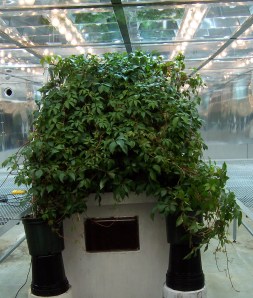
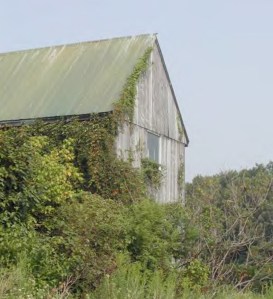
Research has begun on a light weight alternative to extensive green roofs (the least intense form of a green roof) for when structural loads or costs might otherwise deter a client from choosing to pursue a green roof. It is being referred to as a ‘green cloak’ and uses fast growing vine species that attach to a trellis suspended above the roof. Laura Schumann, a graduate student at the University of Maryland completed her thesis on the cost benefits for temperature and stormwater using green cloaks. More complete information on temperature and stormwater reduction can be found on the University’s website.

While green cloaks will likely never provide near the benefits of an actual green roof system, a major potential is that they are probably a less expensive option when installing a green roof is just too cost prohibitive and a client is still looking for a way to save on energy costs. In addition to reducing cooling costs and slowing the runoff of stormwater from roofs, one of the most intriguing facets may be the potential for using vine and trellis systems on sloped roofs where it is currently challenging to implement traditional green roof systems. Another aspect is that vines have the potential to provide cover for vertical surfaces and may help provide even greater temperature benefits when combined to cloak walls as well.

The vine species researched in the study included 5 different species: cross vine (Bignonia capreolata), kudzu (Pueraria lobata), Japanese Honeysuckle (Lonicera japonica), porcelain berry (Ampelopsis brevipedunculata), and Virginia creeper (Parthenocissus quinquefolia).

Virginia Creeper

Testing Virgina Creeper's effects on Building Temperature (Photo from Univerisity of Maryland's website)

One drawback may be that green cloaks might not be as aesthetically pleasing to the masses as green roofs and could be a hard sell for more refined urban or retail areas. And it may also be difficult to provide full coverage for large roofs, however even partial coverage could provide huge cost savings in cooling costs for big box retailers or manufacturer’s with large warehouses where load bearing capacities for roofs are low and aesthetics are not as much of a concern. Either way, this is another potential option available for designers to help reduce energy costs, the urban heat island, and reduce stormwater runoff.

– Sara Putney

GreenCloakTilley.ppt

Inspiration (photo from 'Green Cloak' Presentation, David R. Tilley, University of Maryland)


Sustainable Site Strategies: Rosemary Beach, Florida

2 11 2009

Rosemary Beach-050
Rosemary Beach-099

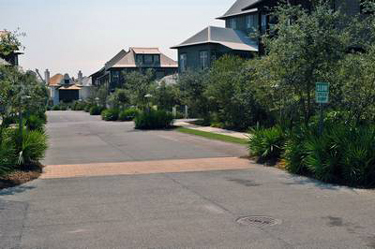
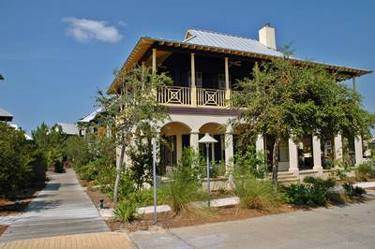
I recently returned from a relaxing week long family vacation in Rosemary Beach, Florida, located on the panhandle just west of Panama City Beach. For those of you not familiar, this is a traditional neighborhood development established in 1995 complete with a Town Center that includes a post office, retail and restaurant space, a hotel, neighborhood parks and more. Many people choose to spend their vacation here for obvious reasons: sun, sand, surf and swimming pools but let’s review what visitors may not notice during their stay.

The following is from the RB website…

“Natural foliage creeps into the pervious pavement streets to slow what little motorized traffic finds its way into town, and keeps drivers alert – a conscious effort to create a safe environment for foot and bicycle traffic. Go green and get pampered at Rosemary Beach!”…

As stated, the streets are constructed of pervious concrete, which allows stormwater from frequent rain showers to penetrate through the pavement and directly into the sandy soil base rather than sheet drain to the typical/conventional system of numerous curb and gutters, inlets and concrete pipes. This isn’t to say there aren’t any storm sewer pipes as part of the infrastructure, just less because of an alternative stormwater solution. The average person visiting Rosemary may only notice that the driving surface is not asphalt and is more ‘bumpy’ that typical concrete.

In addition to pervious concrete, the use of native vegetation is another sustainable site strategy. Using native vegetation requires less water and maintenance while supporting bio-diversity of local wildlife species. Sidewalks, neighborhood boardwalk paths and parks are lined with plants that seem to have been there prior to development and give the impression that the buildings were somehow built around them. Live Oaks create a dramatic tunnel effect over the sidewalks while providing habitat for wildlife such as birds and squirrels. Lizards appear to love hanging out under the low growing palm shrubs and other native plant material. The careful planning of plant material size, location and scale of streetscape planting also aids in the slowing of motorist traffic by psychological affect.

These are only two simple sustainable site strategies/design elements that may go unnoticed by the typical visitor but could serve as an example of how to develop in the future. By the way, I did have fun and relax with my family and didn’t spend they whole week analyzing better ways to develop.

Brian Hudson


Green Roofs Address D.C.’s Environmental Problems

30 10 2009

asla green roofPhoto Source: ASLA

It has been three years since the American Society of Landscape Architects (ASLA) finished the 3,000sf green roof on top of the their headquarters building in Washington D.C. The green roof is unusual in that it is sloped to cover the mechanical units on the roof. An informative video (link to video) was posted on Youtube this month highlighting the stormwater benefits of the ASLA roof. Nancy Somerville, ASLA’s CEO was interviewed during the video and she stressed the important role green roofs could play in helping address Washington D.C.’s and the nation’s difficult stormwater issues (i.e. water pollution, Combined Sewer Overflows). An EPA report estimated 850 billion gallons of untreated sewage and stormwater are discharged nationally each year as combined sewer overflows. (EPA Fact Sheet [pdf]) As Ms. Somerville points out, green roofs can filter the stormwater falling on the roof as well as act as a sponge and significantly reduce the amount of stormwater coming off of the roof. A green roof with 4″ deep planting media has been shown to retain 63% of the rain fall hitting the roof.

During the first year, ASLA conducted a study (link to ASLA green roof website) to quantify the specific benefits of the their green roof. The data showed that 74% of the water was retained on the roof. Interestingly, the water quality of the stormwater discharge leaving the roof included an increase in pH and temperature as compared to the rain fall. In addition, the test results showed a significant increase over the concentration originally present in rain water for Chemical Oxygen Demand (COD), phosphate, total phosphorus, total suspended solids, and total dissolved solids. According to the report most of these contaminants were within the allowed freshwater chronic concentration values established by the E.P.A. and none of the concentrations were above the acute level. Unfortunately, the study did not compare the green roof with a conventional roof. The report concluded that “Green roofs have significant potential for reducing stormwater carried pollutants in major metropolitan areas such as Washington DC. However, more comprehensive and extensive monitoring studies are needed to evaluate specific performance measures of specific designs and develop accurate predictive tools.” The following are a few specific findings highlighted in their press release (.doc):

  • The roof typically retained 100 percent of a one-inch rainfall.
  • The heaviest rainfall during the monitored period was March 16, 2007. A total of 2.48 inches of rain fell during the 24-hour period with the roof retaining 51 percent, the equivalent of 1.3 inches of rain.
  • The green roof did not add any nitrogen to the runoff. Because of the amount of water retained, the roof provided a significant reduction in the amount of nitrogen introduced back into the watershed.
  • Typical of “young” green roofs, the analysis showed higher amounts of some other nutrients such as phosphorus, as well as heavy metals in the runoff—all below EPA standards and below levels expected from street runoff. Based on other green roof research, nutrient levels are expected to decrease in a few years. The heavy metals may be coming from the roof materials or from settled particulate matter/pollutants.
  • It is important to note that this study did not look at runoff from a conventional roof compared to the green roof runoff—and the results would be expected to look different. Water quality testing will be repeated in two years to see how the results change over time with a goal of comparing the green roof runoff to conventional roof runoff.
  • The green roof has been as much as 32 degrees cooler than conventional black roofs on neighboring buildings.
  • Engineering analysis showed that the green roof created a 10 percent reduction in building energy use during winter months and negligible difference in the summer.

On a city wide level, the Casey Tree, a non-profit dedicated to restoring, enhancing and protecting the tree canopy of the Nation’s Capital, conducted a study (link to study) of the Washington D.C. area that examined the impact of green roofs and tree plantings. They concluded that if 55 million square feet of green roofs were installed throughout the Washington D.C. area, they would reduce the reduce CSO discharges by 435 million gallons or 19% each year.

These studies illustrate the effectiveness of including green infrastructure within the overall strategy for cleaning up our nation’s stormwater.

-Brian Phelps


Deaderick Street’s Transformation

28 10 2009

The Tennessee Urban Forestry conference was in town recently and asked Hawkins Partners to give a guided tour of the Nashville Public Square and Deaderick Street. This marked our first “official” tour of Deaderick Street to discuss all of the exciting new aspects of the green street.

Deaderick_Street_3

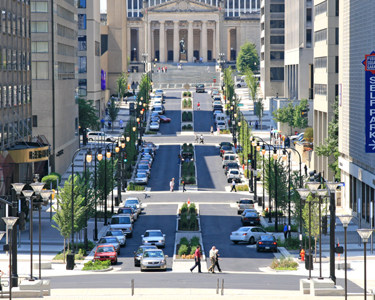
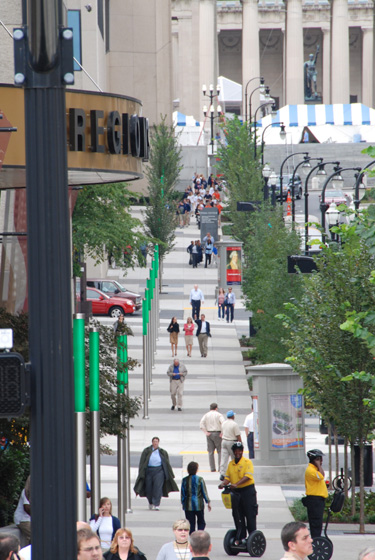
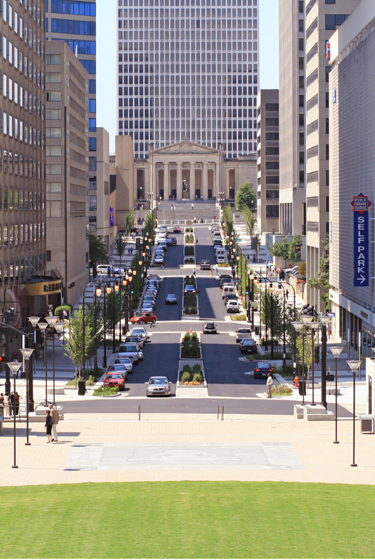
The recent transformation of Deaderick Street recalls the historic importance of the street and enhance the corridor’s prominence as an important civic axis. Prior to the renovations, the street had become most widely known as the central transfer point for the Metro bus system. In the Fall of 2008 the bus system’s hub was relocated one block over to the ambitious Music City Central, presenting an opportunity to re-envision the street itself

Deaderick_Street_4

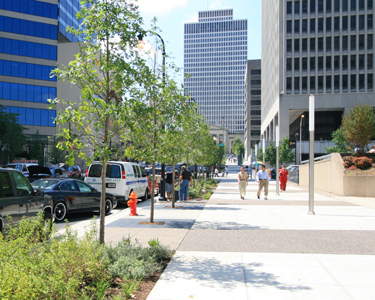
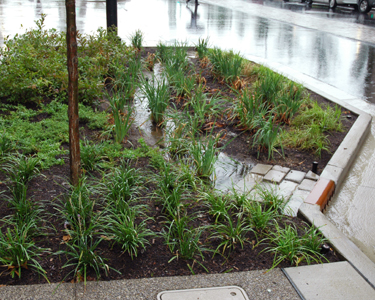
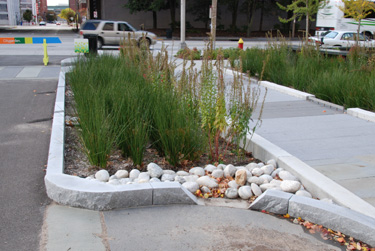
The renovations to the street primarily focused on addressing stormwater issues and urban trees. The existing streetscape was home to an assortment of unhealthy trees ranging in sizes from 2” caliper up to 24”+. Each and every one of them were shoehorned into a 4’x4’ planting zone and struggling to adapt to urban conditions. The renovations included removing those trees and providing larger and deeper planting areas that would not only give a larger volume of soil for the tree roots, but also provide many areas in which the stormwater could travel to, thus reducing the loads into the storm system. Bioretention zones were implemented in pedestrian bulbs at the intersections and in relation to the existing catch basins. These planting areas were also excavated to a depth that would accept enough engineered soils to allow infiltration and planted with plants that can adapt to the extremes of wet and dry conditions. Pervious area within the corridor was increased by over 700%.

Deaderick_Street_1

Many other elements of sustainability were included, such as:

  • Crushed and recycled concrete used for the pavement subbase,
  • Fly ash utilized in the concrete mix,
  • Porous concrete,
  • LED light fixtures,
  • Native and drought tolerant plant materials,
  • Solar powered parking meters,
  • Water efficient irrigation system,
  • Many local vendors and fabricators,
  • The addition of bike racks to help encourage a healthier way to travel, and
  • The addition of recycling receptacles along the street.

We’re hoping that in the near future, permanent retail kiosks that were proposed in the master plan will be added to the street, further enlivening the corridor. Those kiosks are proposed to have an extensive greenroof on each. In addition, the master plan identified areas for future free standing retail buildings and liner buildings that could be added on the blank facades.

– Laura Schroeder


Educational Awareness and Green Infrastructure

26 10 2009
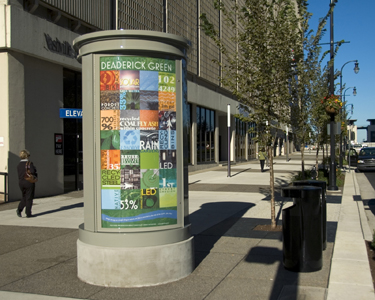
While attending the recent Tennessee ASLA conference, and sitting in on a lecture about native plants, a presenter made an offhand comment stating that public education is the most important thing we can do to raise awareness, because if people don’t know about things then how can we expect them to care? Whenever possible, HPI has incorporated interpretive graphics into public projects such as greenways or parks, to highlight the history of the place or unique features of the site. Recently we have been provided the opportunity to create educational signage about sustainability for two newly completed projects – the first for a private developer and installed at Hill Center Belle Meade and the other for the City of Nashville for the renovation of Deaderick Street.

Environmental Stewardship campaigns have been around a long time with recycling awareness programs, Arbor Day, etc. Incorporating educational signage about sustainability into the built environment adds another facet to this type of non-formal education for the general pubic and is another perfect opportunity for landscape architects to become involved. Some traditional public awareness methods require the people to find their way to specific websites (the EPA has a couple of great sites geared towards the younger age groups; Environmental Kids Club or Polluted Runoff) or people have to just happen see things in the media. While these are all good, they may make it hard to target a wide range of groups.

The cool thing about putting educational posters in the built environment is the wide audience that you can target. For instance, a lot of different people on their way to the supermarket in Hill Center Belle Meade, or to their office buildings or the theater on Deaderick Street, will walk by these signs everyday. We just hope it sparks interest and provides a topic of conversation to raise even more awareness for sustainable practices.

Rainwater Harvesting Sign at Hill Center Belle Meade

Rainwater Harvesting Sign at Hill Center Belle Meade

Highlighting the Sustainable Practices in Deaderick Street Construction

Highlighting the Sustainable Practices in Deaderick Street Construction


St. Louis Roadtrip: Citygarden’s Green Street

23 10 2009

citygarden_green_street_1

citygarden_green_street_3

citygarden_green_street_2

A couple of us at the office decided to make a roadtrip to St. Louis to see the new Citygarden, a three-acre sculpture park designed by Nelson Byrd Woltz that opened mid-summer. It was a pleasant surprise to see that the street cutting through the two blocks comprising the garden is a green street. The pedestrian bulbs on the south end have openings in the stone curbs to allow water to enter. Small strips of asphalt were also added at each opening along the curb to help divert additional water. The rain gardens are further expanded by incorporating small steel boardwalks along the sidewalk that allow water to move from the pedestrian bulbs to a larger landscape area on the opposite side of the walkway. The boardwalks draw attention to the rain garden as you pass over it. This green street was just one of the many exciting elements found in Citygarden. The park is an impressive addition to the city.


Nashville’s First Green Street Opens

21 10 2009

deaderick_street_opening_3

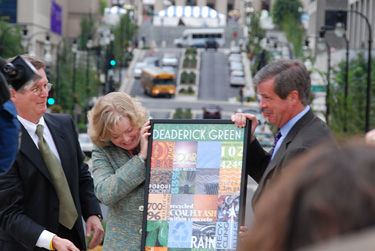
Jim Snyder, Metro Public Works and Kim Hawkins, Hawkins Partners
present graphic panel to Mayor Karl Dean.

deaderick_street_opening_1

View of Streetscape During Event

deaderick_street_opening_4

View from Public Square to Legislative Plaza

On October 8th, Nashville’s first green street opened with great fanfare. Mayor Karl Dean, Kathleen O’Brien (President and CEO of the Tennessee Peforming Arts Center), and Billy Lynch, the Director of Nashville Public Works Department, spoke at the street’s eastern terminus in Public Square. The celebration also included music by Decca Records and SONY/ATV artists One Flew South, featuring Grammy Award-winning composer Marcus Hummon, and Transit, a band formed by Nashville MTA employees. A recording of the event has been posted on Metro Nashville’s website. (Link)


What SHOULD be green about our city’s infrastructure?

19 10 2009

green_infrastructure

Green. These days that one word has many different meanings. Growing up, I could count on “green” being one of the eight colors in a Crayola package, but today, this one word has many more connotations. Being landscape architects, we plan to use this blog as a way to explore “green” in terms of site sustainability issues, with a focus on green infrastructure. So maybe we start with the first question: What SHOULD be green about our city’s infrastructure?

When we think about stormwater infrastructure, it is generally conceived of as the complex system that accepts, stores, manages and treats our stormwater. In the conventional designs of the past several decades, this has been done through drains, pipes, curb and gutter and a whole host of devices to hold or detain the water from our bigger storms. With green infrastructure, we look at the potentials of natural systems to deal with those same issues: more interception of stormwater allowing it to evapo-transpire, infiltrate and be held and used for others purposes (like irrigation or flushing water for toilets). This reduces the load on our aging storm pipe system, allowing it to function longer AND it often allows a more cost-efficient solution for the life of the project.

Specifically here at Green Infrastructure Digest we’ll discuss green infrastructure as it relates to four primary areas:

  • buildings and structures/ green roofs and green walls
  • hardscape / pervious pavements and overflow inlets
  • landscape / bio-swales, raingardens, green streets
  • water capture and reuse / rainwater harvesting, greywater harvesting, passive irrigation
  • related site sustainability issues

Over the past 23 years at our firm, Hawkins Partners, Inc. landscape architects, we have had the opportunity to put this talk into practice having now designed over 500,000 s.f. of green roof, being involved in the first three LEED projects in the State of Tennessee (and many more since then) and incorporating many of these sustainable practices effectively in a number of different projects. We find that our clients like the idea of getting back to natural systems and putting dollars into aesthetically pleasing solutions that also deliver an environmentally sound and cost-conscious solution.